Dealing With Pressure in the Right Way Enables You to Perform at Your Best
Saskja Lack
22. October 2026
22. October 2026
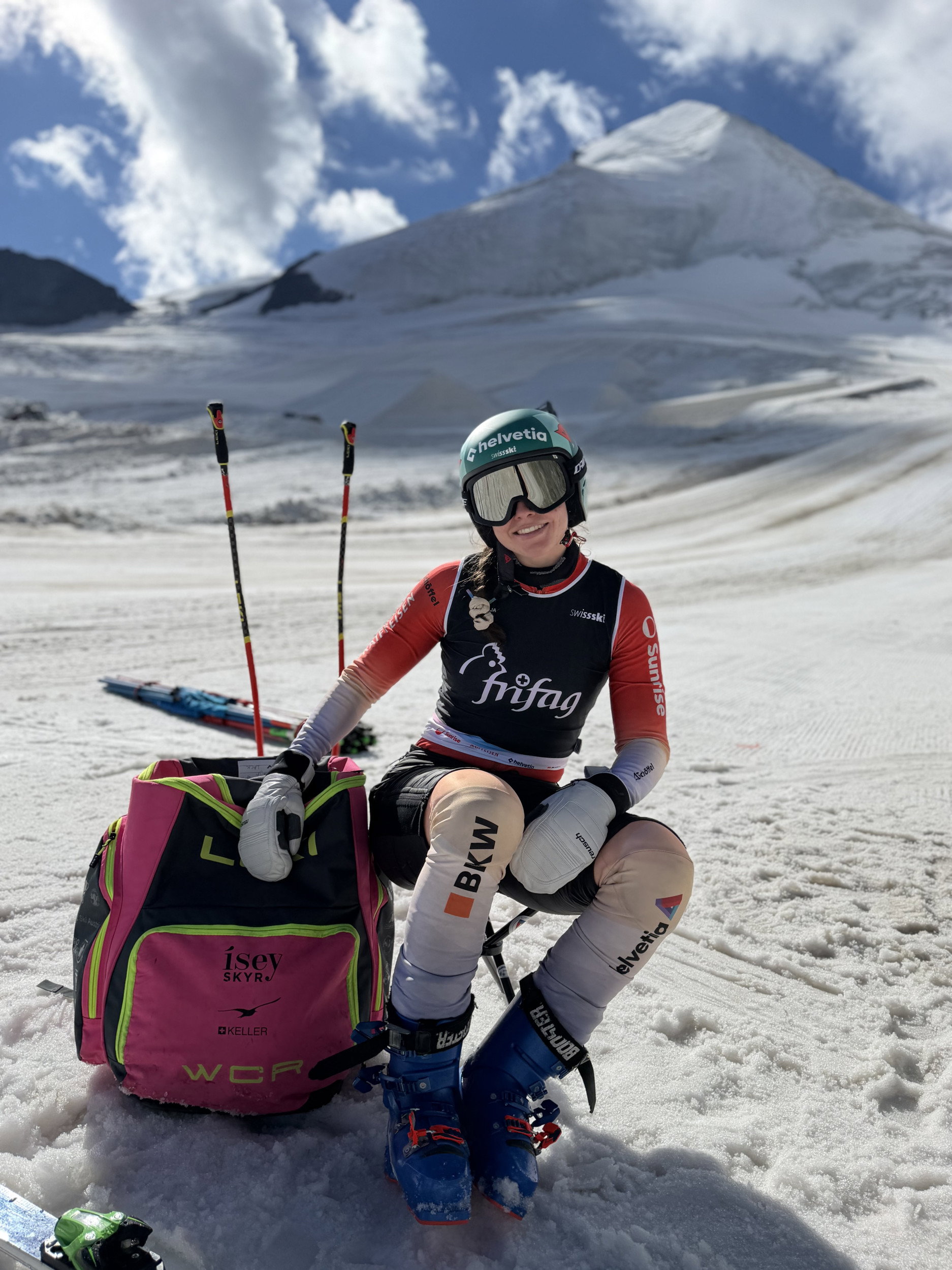
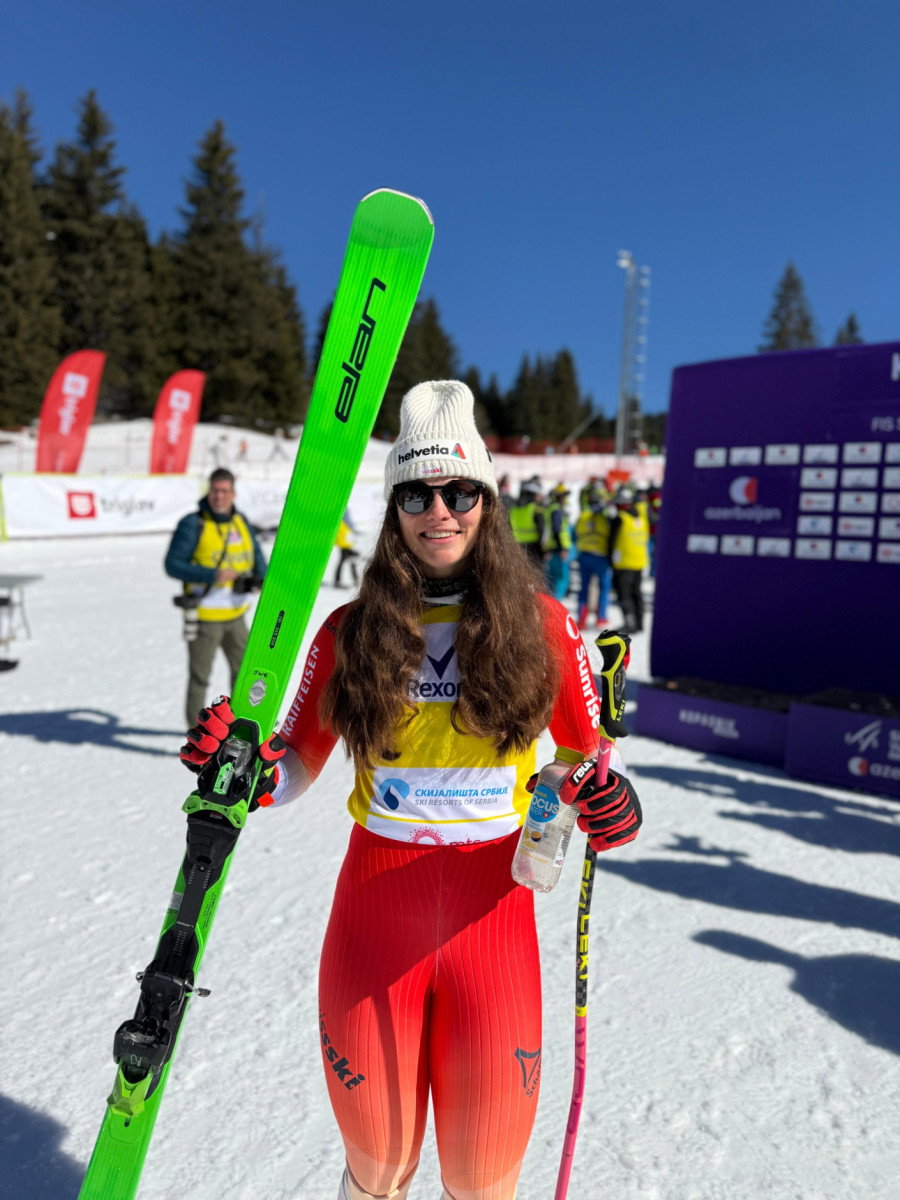
Saskja Lack, from Winterthur, knew from an early age that she wanted to become a top-level athlete. What began as a love of thrills developed into a successful career in ski cross. Along the way, this ambitious athlete has not only learnt a great deal about sport, but has also gained valuable insights for her life.
Since the start of this year, KELLER Pressure has been supporting Saskja in her sporting career. In the following interview, she explains what ski cross means to her and which changes of direction on her path to the top of the world rankings have been particularly instructive.
You grew up in Winterthur and are now part of the Swiss national ski cross team. What has your journey been like, from grassroots sport to the very top of the world rankings?
I stood on skis for the first time as soon as I could walk. After ski school, I joined the ski club, which set me on the path to a career in skiing. At the same time, I took up BMX racing and realised that the two sports complement each other well in terms of the skills they require. When I started at the sports grammar school, I decided to focus entirely on BMX racing. During my time at grammar school, I competed in international races and pursued my dream of taking part in the Summer Olympics. At the age of 17, I finally discovered skicross, which proved to be the ideal combination of both sports. I felt very much at home in this discipline right from the start. Initially, I continued to practise both sports, but with my first successes in ski cross and my selection for the Swiss-Ski squad, my priority quickly shifted increasingly towards ski cross. I worked my way up from national races through the European Cup – after winning the overall title – to the Ski Cross World Cup. This path has enabled me to qualify for the Olympics twice and secure four World Cup podium finishes so far. I’m currently ranked amongst the world’s elite and will continue to train intensively to close the gap on the very best in the world.
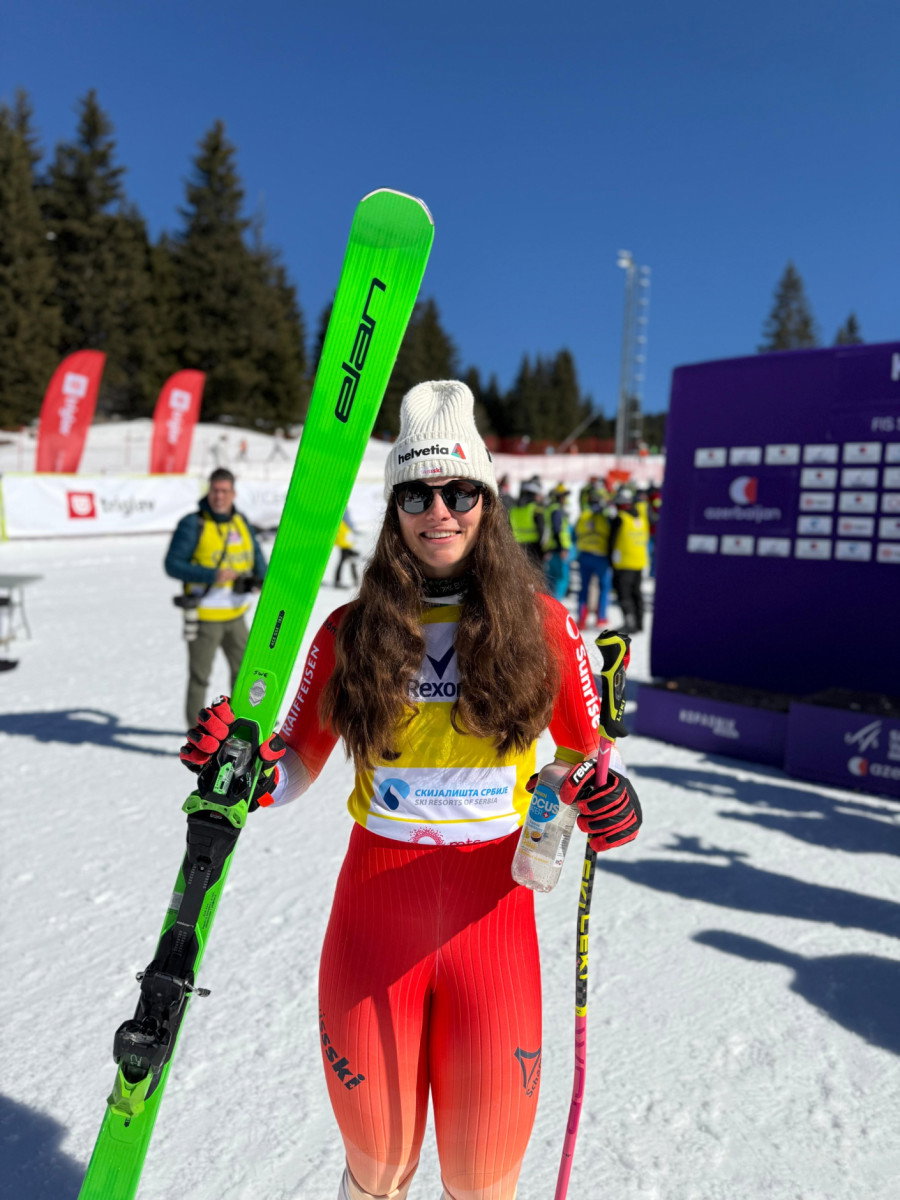
With your second appearance at the Olympics and your World Cup successes, you’ve already achieved many milestones. What are you particularly proud of?
Generally speaking, my progress as an athlete means a great deal to me. I’m proud of the courage I had back then to embark on this unusual path and, unlike almost all other ski crossers, to come not from alpine skiing but from BMX, and to establish myself in this new discipline. It shows me and others what’s possible when you believe in your success and train hard for it day in, day out.
What have been the biggest challenges of your career so far?
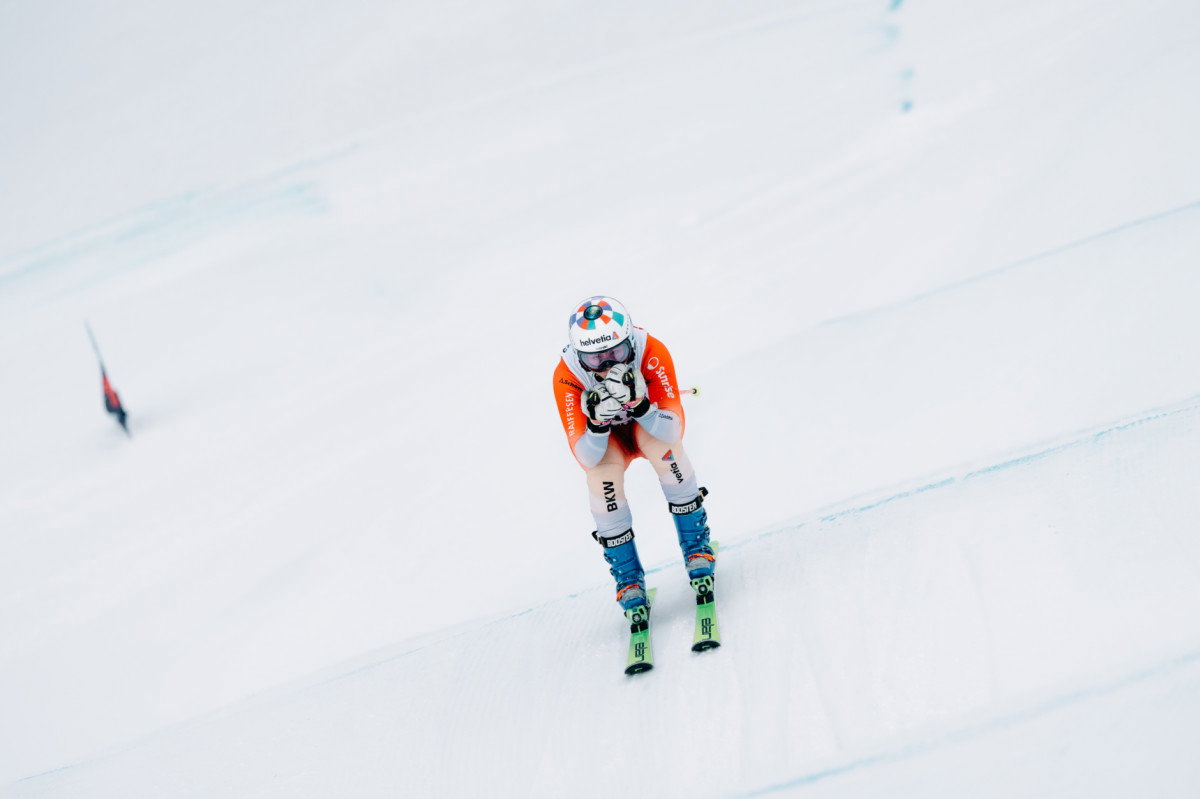
The biggest challenge was undoubtedly my injury in December 2024. I had a serious fall and injured my pelvis and shoulder, which meant I had to undergo surgery. That moment of uncertainty about my sporting future was the lowest point of my sporting career so far. Nevertheless, I quickly refocused on moving forward. The months that followed, as I worked towards my ‘comeback’ at the home World Championships – which many considered impossible – were the greatest challenge of my career. Countless hours in the gym and in physiotherapy lay ahead, and during that time I learnt what this career means to me and just how much I am prepared to give to continue pursuing my goals, despite such setbacks.
Source: Marc Amann
Whether in sport or at work, pressure is often part of the deal. How do you deal with challenging situations, and what helps you stay focused?
For me, pressure is part and parcel of top-level sport, and I try not to see it as something negative, but as a sign that there’s something at stake. At the start, I block out everything I can’t influence – such as the competition or external expectations – and focus on what is within my control: namely, my preparation and my plan. What helps me with this is the knowledge that hard work in training is the real key, even if you often only realise that later on. My injury, in particular, showed me that it’s not about having no doubts, but about carrying on regardless. That has helped me to see setbacks as part of the journey, pushing me further forward. Ultimately, I believe that how you deal with pressure is often crucial, and that’s exactly what I’m constantly working on. It’s a daily part of every training session, and so pressure becomes more of a positive thing for me – something I turn into energy and carry with me into my everyday life.
What does a typical training day look like for you?
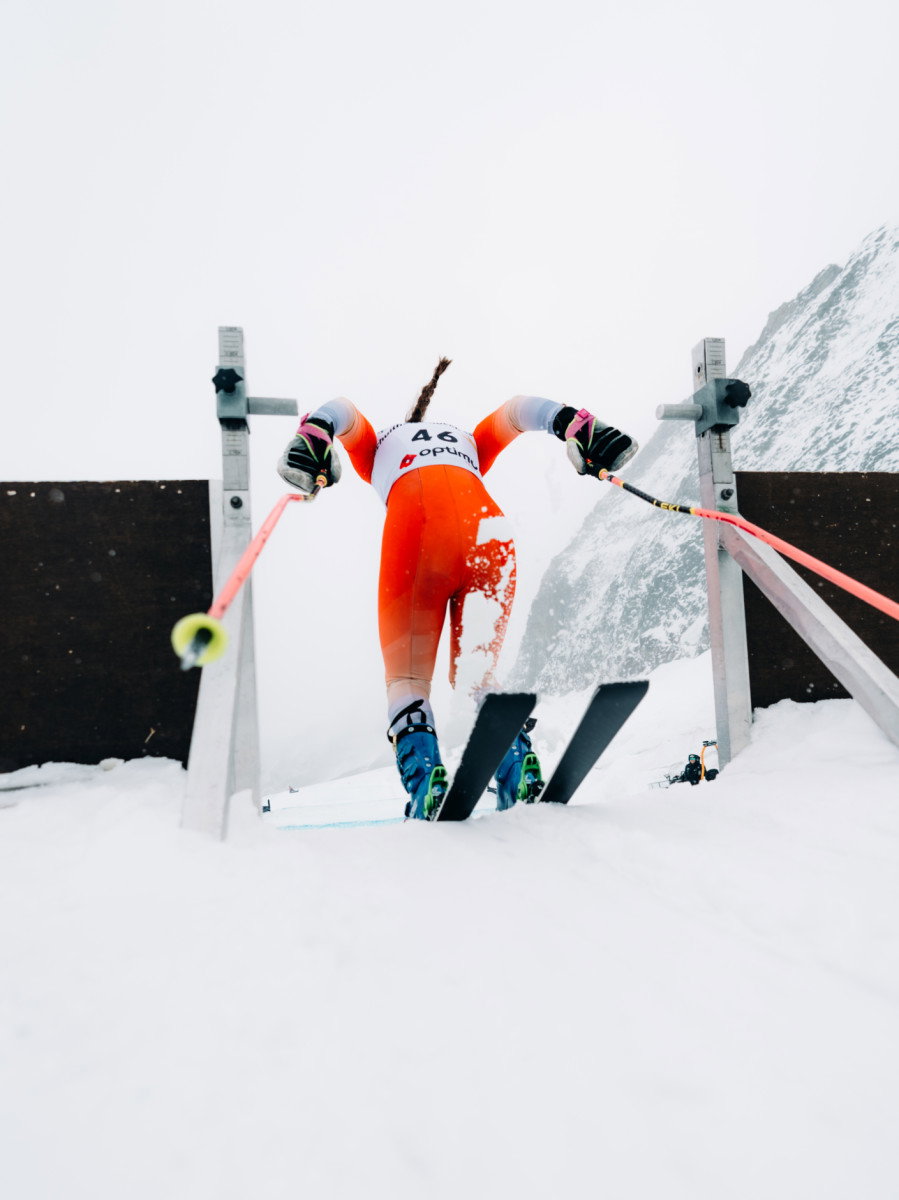
In the summer, we do daily strength training in the mornings. This is complemented by endurance, BMX and multi-sport sessions in the afternoons. Sometimes, recovery sessions such as physiotherapy or massages are added to the programme. It’s important to have balanced meals between sessions, as well as plenty of rest and as much sleep as possible.
From September, preparations for the snow begin. This means heading up to the glacier early, where we complete as many runs as possible by midday, whether in giant slalom or ski cross. In the afternoon, the programme includes fitness training, video analysis and physiotherapy. These days are very intense, which is why recovery is all the more important.
Source: Marc Amann
Where can we find you when you’re not on the slopes or training?
Either in the office, where I look after my own marketing, my sponsors, the website and things like that, or alternatively on the balcony with a delicious coffee and a good book. In between, there’s also time for friends – which is very important to me and provides the necessary break from top-level sport – as well as for holidays. I love heading to Italy, to Lake Como, or somewhere by the sea. But sport is a must even when I’m there.
What goals would you still like to achieve in the coming years, both in sport and on a personal level?
My aim is to become the best ski crosser in the world. I therefore want to win World Cup races, World Championships and the Olympic Games. On a sporting level, this means never stopping striving to improve every day. It also means being able to realise my full potential in all areas, be it mentally, athletically or in terms of skiing technique. On a personal level, this involves developing into a role model in sport. I think it’s wonderful to be able to turn my dream into a career, and I want to embody this and pass it on to the younger generation.
Many people have big goals, whether in their professional or personal lives. What advice would you give to someone who has a big dream and wants to achieve it?
Even though I haven’t yet achieved my goals, I believe that with determination, enthusiasm and hard work, you can achieve anything you set your mind to. However, you have to be prepared to give it your all, never let difficult situations put you off, but face up to these challenges, even if it sometimes seems impossible. I believe you can learn something new and improve every day, and in doing so, get one step closer to your dream. In my opinion, this applies to all areas of life, whether in your personal life, your career or in elite sport.
What significance does the Winterthur region (still) hold for you today?
It is and always will be my home. I train every day in Winterthur, I know where to find the best coffee, and I really appreciate having my family and my closest friends here with me – they’ve been by my side right from the start. No matter where the racing season takes me, Winterthur is the place I’m always happy to return to, to recharge my batteries and prepare for the next challenge.
KELLER Pressure has been sponsoring you since the start of this season. What is your connection with KELLER Pressure, and what shared values do you see between yourself and the company?
What connects me to KELLER Pressure, above all, is the courage to take calculated risks. In ski cross, a bold choice of line often determines victory or defeat. You have to learn to strike a balance between risk and control, just as the company does in product development. Of course, we’re also connected by the fact that we’re both based in Winterthur. The most important thing is that we both know how to cope with pressure. That is precisely what enables us to perform at our best.
Share
«What connects me to KELLER Pressure, above all, is the courage to take calculated risks. In ski cross, a bold choice of line often determines victory or defeat. You have to learn to strike a balance between risk and control, just as the company does in product development.»
Saskja Lack